Estelle Kilias
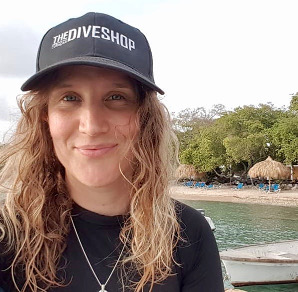
I am a marine ecologist interested in understanding the ecology and evolution of planktonic eukaryotic microorganisms. Protists (eukaryotic microorganisms) play key roles in marine biogeochemical cycles and present a tremendous evolutionary diversity. I started studying biology at the University of Marburg and changed for my main study to the University of Rostock (Germany), where I focused on marine biology and marine chemistry. In 2013, I completed my PhD at the Alfred Wegener Institute for Polar and Marine Research where I was part of the Helmholtz Young Investigator Group ‘PLANKTOSENS’ and participated in the interdisciplinary ‘Polar Ecology and Biogeochemistry in a Changing Arctic Ocean’ group. In 2015, I was awarded a Marie Curie fellowship which I started in 2016 at the University of Exeter (F-POLE: Fungi in Polar Ecosystems). Since 2020, I have been working as a postdoc at the University of Oxford.
Here, my current research focuses on how environmental drivers influence the microbial phylogenetic and functional diversity, especially in cold-water environments (e.g. changes in sea ice, salinity, light availability and nutrients). Among marine eukaryotic microbes, ‘marine-derived fungi’ are under-studied and insights into their ecological role are lacking. I am particularly interested in the effect of changes in host-parasite interactions e.g. between diatoms and chytrids, marine-derived fungi with swimming tails. Further, I am part of the Darwin Tree of Life initiative, focusing on single-celled aquatic protists. The Darwin Tree of Life initiative aims at sequencing the genomes of all life in Britain and Ireland, delivering a catalogue of reference genomes which will help us shed light on the ‘black box’ of eukaryotic diversity evolution.
To answer my research questions I apply a combination of different molecular techniques including amplicon sequencing of molecular marker genes, single-cell sorting and single-cell genome and transcriptome sequencing.
Selected Publications
- A molecular survey of protist diversity through the central Arctic Ocean. 2014, Kilias E., Kattner G., Wolf C., Frickenhaus S. and Metfies K. Polar Biology 37: 1271-1287 https://doi.org/10.1007/s00300-014-1519-5
- Insight into Protist diversity in Arctic sea ice and melt-pond aggregate obtained by pyrosequencing. 2014, Kilias E., Peeken I. and Metfies K. Polar Research 33: 23466 https://doi.org/10.3402/polar.v33.23466
- Protist in the polar regions – comparing occurrence in the Arctic and Southern oceans using pyrosequencing. 2015, Wolf C., Kilias E. and Metfies K. Polar Research 34: 23225 https://doi.org/10.3402/polar.v34.23225
- Plankton ecology and biogeochemistry in a changing Arctic Ocean- Overview of long-term summer measurements in the Fram Strait. 2015, Nöthig E.M., Bracher A., Engel E., Metfies K., Niehoff B., Peeken I., Bauerfeind E., Cherkasheva A., Gäbler- Schwarz S., Hardge K., Kilias E., Kraft A., Mebrahtom Kidane Y., Lalande C., Piontek J., Thomisch K. and Wurst M. Polar Research 34: 23349 https://doi.org/10.3402/polar.v34.23349
- Biogeography and Photosynthetic Biomass of Arctic Marine Pico-Eukaryotes during Summer of the Record Sea Ice Minimum 2012. 2016, Metfies K., von Appen WJ., Kilias E., Nicolaus A. and Noethig EM. PLoS ONE 11 (2): e0148512 https://doi.org/10.1371/journal.pone.0148512
- Impact of sequence processing and taxonomic classification approaches on eukaryotic community structure from environmental samples with emphasis on diatoms. 2018, Hardge K., Neuhaus S., Kilias E., Wolf C., Metfies K. and Frickenhaus S. Molecular Ecology Resources 18: 204-216 https://doi.org/10.1111/1755-0998.12726
- Fungal distribution and co-occurrence with diatoms in the Arctic Ocean is correlated with sea ice melt. 2020, Kilias, E., Junges, L., Metfies, K. and Richards, T. Communications Biology 3: 183 https://doi.org/10.1038/s42003-020-0891-7
- A diversified and segregated mRNA spliced-leader system in the parasitic Perkinsozoa. 2022, Alacid E., Irwin N.A.T., Smilansky V., Milner D.S., Kilias E.S., Leonard G. and Richards T.A. Open Biology 12: 220126 https://doi.org/10.1098/rsob.220126
- Comparative single-cell genomics of two uncultivated Naegleria species harboring Legionella cobionts. 2025, McGowan J., Kilias E.S., Lipscombe J., Alacid E., Barker T., Catchpole L., McTaggart S., Warring S.D., Gharbi K., Richards T.A., Hall N. and Swarbreck D. mSphere 10: e00352-25 https://doi.org/10.1128/msphere.00352-25
- Single-cell sequencing reveals unexpected genetic diversity among Bodo spp. flagellates and their bacterial endosymbionts. 2026, Warring S.D., McGowan J., Kilias E.S., Lipscombe J., Alacid E., Barker T., Catchpole L., Gharbi K., McTaggart S., Richards T.A., Swarbreck D. and Hall N. Microbial Genomics 12: 001642 https://doi.org/10.1099/mgen.0.001642
- Tadpole Doctor: a UK-based citizen science project that identifies novel Perkinsea clades closely related to candidate amphibian pathogens. 2026, Poirier C., Milner D.S., Kilias E.S., Leonard G., Mathur V., Brannigan E., Jirků M., Smilansky V., Orton F., Lukeš J., Chambouvet A. and Richards T.A. ISME Communications 6: ycag154 https://doi.org/10.1093/ismeco/ycag154
Hobbies & Interests
I love travelling the world with my backpack and I am clearly biased towards colder climate regions of this planet. Being totally weather proof, I am also very fond of Ireland & the local Indie Rock music scene. Most of my books cover documented adventures of past research expeditions which help me a lot keeping the spirit during my sampling trips - it always could be worse! Otherwise, I enjoy running (with the right soundtrack on loud), scuba diving and hiking.